
From Engineering to the Frontlines of African CDR
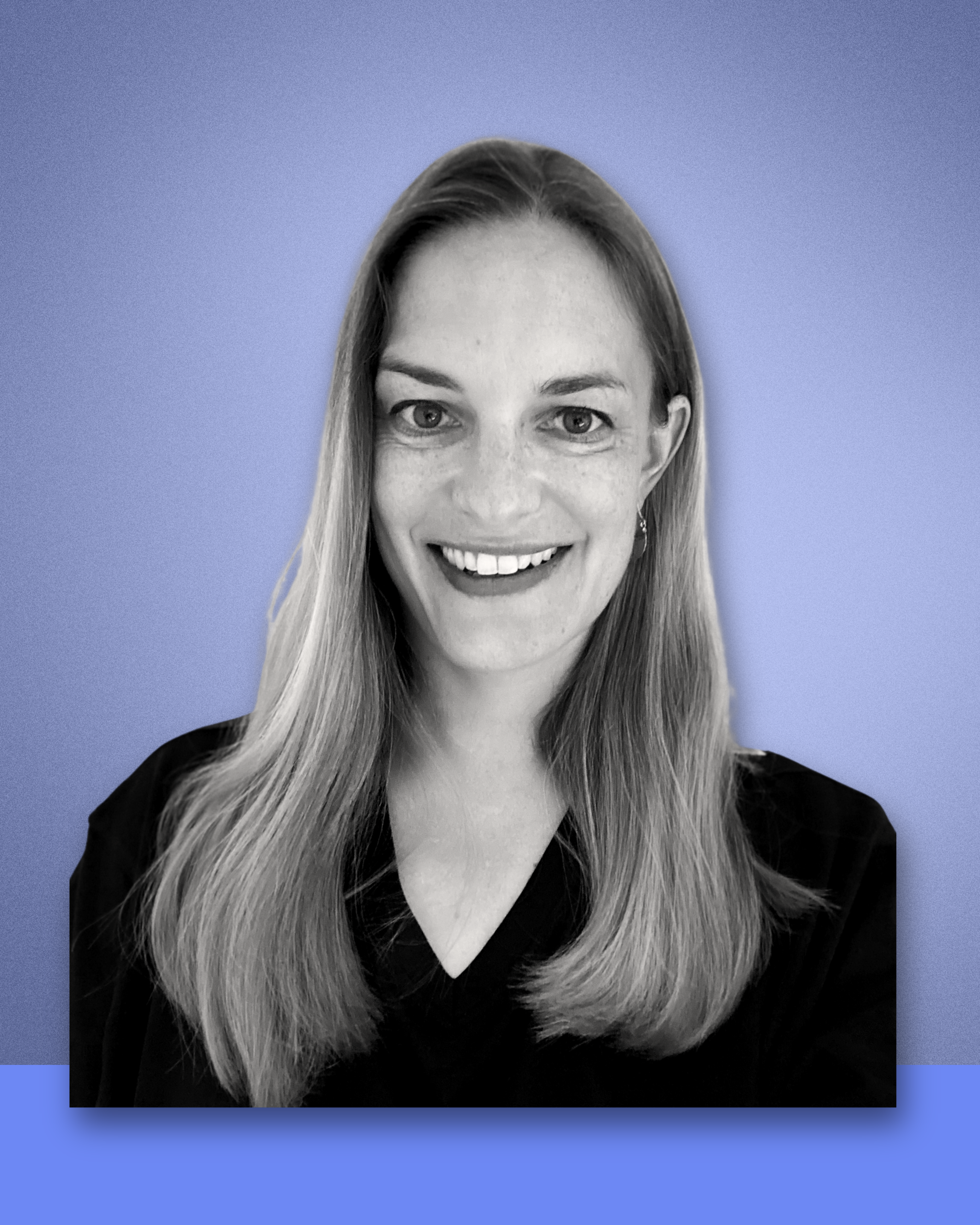

Sifa Kinoti grew up believing she could leave the world a better place. That conviction took her from environmental engineering at the University of Nairobi into Octavia Carbon, the first direct air capture company in the Global South. Now Head of Policy and Partnerships, she talks about what it really takes to thrive in a CDR startup, how to break into a sector that barely exists yet in East Africa, and why she thinks her continent shouldn't be waiting for someone else to lead.
Sifa's journey into carbon removal was intentional, with a clear sense that she was walking into something unfinished, uncertain, but genuinely worth building. That clarity was rooted in growing up in a household where the expectation was simple: do something that matters. The rest, as Sifa would tell you, has a way of carving itself out.
A belief in doing something that matters
Sifa's parents consistently pushed her and her siblings to find ways to leave the world a better place. Environmental justice was the lens she developed early on, long before it became a career.
Environmental engineering at the University of Nairobi felt like the obvious path: technical enough to satisfy her love of maths and science, broad enough to stay connected to the science-policy interface she already found compelling.
Carbon removal entered the picture during her final year. She started exploring direct air capture for her thesis though she ultimately wrote about something else. But it had planted the seed that drew her to CDR. It wasn't just the science, it was a gap she kept noticing. Energy transition was already well-funded and well-researched. Carbon removal felt different.
"CDR just looks like a hidden gem. It's somewhere that nobody was paying much attention to, that I wanted to research and give a spotlight — and see if this could really be something for Africa to leverage."
The reality of being on the inside
Octavia Carbon is historic by any measure: the first DAC company in the Global South, operating in Kenya, building something that has never been built before in this context. Sifa had crossed paths with Octavia's CTO, Duncan, at university, where both had been sponsored by the Kenya Space Agency on separate undergraduate projects. When a role opened up, she knew enough about the team and the mission to say yes.
"There was an opening at Octavia, so one thing led to another and that's how I found myself in CDR."
From the inside, the experience is fast-paced, difficult, and on most days, genuinely energising. The team goes back to the drawing board constantly: machine design, fundraising strategy, public affairs. There is no established playbook, and many of the challenges they face are ones the whole CDR sector is working through simultaneously.
What keeps the energy up is partly the team, and partly something harder to manufacture: the feeling that you're not working in isolation. The broader CDR community: other developers, researchers, advocates, provides a counterweight to the difficulty.
"There are so many skeptics. From the policy angle. From the public. From the community. Sometimes you can feel worn out by the negative press that CDR sometimes receives. But when you're surrounded by a community of people who are just willing to make it work, it's encouraging."
There is also the less visible work. Building social licence for a technology nobody in your community has seen before takes sustained effort. Octavia's environmental licence took close to a year to secure, something that should take 60 to 90 days, but because regulators needed time to understand what DAC is, how to regulate it, and what safeguards make sense. The team also runs five community programs spanning across education, healthcare, economic empowerment, and environmental conservation. Octavia's not just building a machine. They're building the entire ecosystem around it.
A pivot nobody saw coming — including her

Sifa joined Octavia in an MRV and compliance role. The move into policy and partnerships wasn't planned. It happened when a colleague moved on and nominated her to step up. She didn't feel ready, but she said yes anyway.
What made the transition possible was that the boundary between her original role and the new one was never as firm as the job titles suggested. Her MRV work overlapped naturally with policy conversations. She'd been helping draft statements, supporting community engagement, attending discussions that were technically outside her remit. When the opportunity came, she had more context than she realised.
"One of the beauties about working in a startup is that you get to pivot all the time."
Her advice to people navigating a sector where roles are still being invented: pay less attention to job titles and more to where your skills and instincts actually point. She was technically strong in MRV but she's also a people person. The role that genuinely fits her uses both. She only found out by staying curious about the work around her, not just the work in her lane.
"Sometimes what you studied does help in the long run. You're able to interpret those technical compositions at a higher level. But you also leverage your soft skills. If you're a people person, if you prefer working behind a desk, if you think in different types of structures, the path will carve itself out eventually."
How to actually break in
For people in Kenya or across Africa wanting to work in CDR, Sifa's advice is grounded in what actually works, not what sounds good in a cover letter.
Start with the fundamentals: understand what CDR is, why it's necessary, and what the key technical challenges are across different pathways. Use whatever resources you can find: reports, AI tools, podcasts. The point isn't expertise; it's showing up with genuine curiosity rather than a blank slate.
Then reach out, but with something to offer. At Octavia, they have an open door policy for people who want to visit and see the work. If you've looked into a specific challenge such as energy efficiency in DAC, and can speak to it, that gets you on the radar even when there's no open role.
"Don't just reach out and say you're looking for a job. Provide some sort of value."
What Octavia screens for in hiring is less about credentials and more about mindset. Their application process includes a challenge designed to test thought process, not technical knowledge. It's a hypothetical scenario similar to what you'd actually face in the role. They want to see how you think, how you research, how you approach a problem you don't already have the answer to.
In interviews, the non-negotiable is attitude. In a sector that is still figuring out its own rules, that matters more than almost anything on your CV.
"Are you willing to learn? Are you willing to fail? Because you're going to fail a hundred times before you succeed."
That willingness to sit with uncertainty is not just what Octavia looks for in candidates. It's what Sifa believes the whole African CDR sector is going to need.
CDR isn't someone else's problem to solve
Ask Sifa about the biggest misconception in CDR and she doesn't hesitate. It's the idea that tech-based carbon removal is a rich country's solution to a rich country's problem and that Africa can afford to sit this one out and wait for someone else to clean things up.
"We can't just sit down and call ourselves victims and wait for someone else to come up with a technology elsewhere and clean it up. We have the capacity, we have the natural resources, we have the talent. We can be part of the solution, and it can have economic benefits, socioeconomic benefits, to industrialisation, to the energy transition, and of course to the climate."
Part of Sifa's job is making that argument to regulators, to local communities, to international partners who don't yet see Africa at the centre of the CDR story. Kenya has active carbon market regulations, a recently launched carbon registry, and a trade association, the Carbon Removal Kenya Association, co-founded by Octavia. It represents CDR companies in government conversations. The infrastructure for a serious regional ecosystem is being built in real time.
She's not waiting for permission to make the case. And if her own trajectory is any guide, from a final year thesis tangent, to MRV analyst, to Head of Policy and Partnerships at a historic company, the path into this sector rarely looks the way you expect it to. It carves itself out, if you're willing to move with it.
--------------------------
Humans of CDR is a series by CDRjobs featuring the people building and working in the carbon removal industry. If you'd like to be featured or know someone who should be, get in touch.


Comments